For years, video felt like a reliable form of proof. Seeing someone's face on camera, especially live, was about as close to "verified" as a digital process could get.
That assumption is quietly breaking down.
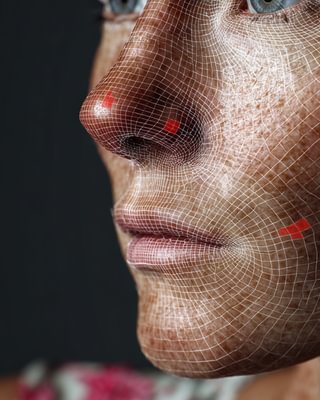
AI video models can already generate remarkably realistic footage in seconds. And it does not stop at pre-recorded clips: even "live" moments can potentially be faked in a convincing way, with generated video streamed into a call as if it were coming from a real camera.
For most industries, that is a growing concern. For healthcare, it is a direct threat to processes that depend on knowing exactly who is on the other side of the screen.
Video verification is getting harder and healthcare should pay attention
Where this hits healthcare first
Healthcare has spent the last few years moving more of its front door online. Many of those digital entry points rest on some form of video or image-based identity verification. Three areas stand out:
Telehealth identity checks
Remote consultations often rely on a quick visual confirmation that the person on screen is the registered patient. If a face on video can be synthesized or swapped in real time, that visual check alone no longer proves much.
Remote patient onboarding
New patients increasingly register from home: upload an ID document, take a selfie or short video, done. That convenience is exactly what makes it attractive to attackers. A generated face matched to a stolen or forged document can pass a superficial comparison.
Prescription and insurance fraud prevention.
Identity is the foundation of controlled prescriptions and insurance claims. If someone can convincingly impersonate a patient (or a clinician) on video, the door opens to fraudulent prescriptions, claims under someone else's coverage, and access to medical records that were never theirs to see.
The real problem is not that deepfakes exist
Deepfakes have been around for years. What has changed is the economics.
Creating convincing fake video used to require technical skill, powerful hardware, and time. Today it requires a subscription and a prompt. The cost of a credible fake has collapsed, while the quality has climbed — which means the basic checks that used to be "good enough" quietly stopped being good enough.
A human reviewer glancing at a selfie video. A simple face-match against an uploaded ID photo. A one-time "please look at the camera" step. These were designed for a world where faking video was hard. That world is ending.
Getting there comes down to a few things that sound simple but rarely are:
- Truly understanding workflows. Not the workflow as described in a process document, but the workflow as it actually happens on the floor, at 4 PM, with a full waiting room.
- Building trust. Trust is earned through consistency, transparency, and honesty about what the tool can and cannot do. One confidently wrong answer costs more trust than a hundred correct ones build.
- Great UX. In healthcare, user experience is not a nice-to-have. It is the difference between a tool that saves time and a tool that gets abandoned after week two.
- Compliant technology that supports all of this. Privacy, security, and regulatory compliance are not obstacles to innovation — they are the foundation that makes clinical adoption possible at all.
What "rethinking your security" actually means
The answer is not to abandon remote verification — the convenience and accessibility gains for patients are too valuable. The answer is to stop treating a video or image as self-evident proof and start treating it as one signal among several.
A simple test
Here is a question worth asking about every remote identity process in your organization: If someone uploaded an AI-generated video or photo instead of a real one, would our current process catch it?
Thinking about AI for your product?
Get in touch with our team and let's explore what it could look like.