






Back to AI & ML

Prediction & risk models.

Know what's coming before it happens.

We build production-grade prediction models that score risk, forecast demand, and flag patterns before your team has to react. Built on your data. Calibrated for your decisions. Delivered through APIs your products and platforms can actually call.

  • LUMC
  • pvdd
  • ToursTickets
  • Sire
  • Ziz
  • Denso
  • Kinsyn
  • Sci Sure

What prediction and risk models actually do

A prediction model takes the data you already have and learns the patterns that lead to outcomes you care about. Then it scores new inputs against those patterns. The model doesn't guess. It calibrates.


The output isn't "this is risky" or "this is fine." It's a probability score, paired with a clear threshold strategy that turns the score into a decision. Who to escalate. What to flag. When to act. The model turns vague intuition into a calibrated, defensible signal.

Done properly, a prediction model becomes a core part of how the business operates. Done badly, it stays in a notebook forever. We build the kind that runs in production.

Models for the decisions that matter.

Risk scoring, forecasting, detection, and churn. Built for the workflow where the decision lives.

Real-time risk scoring

Score risk at the moment of decision.

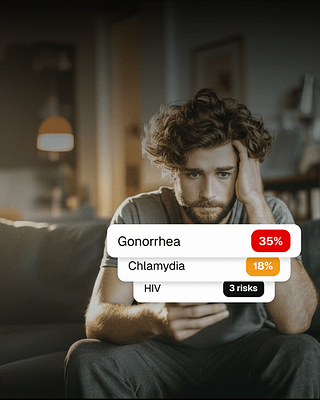
Real-time scoring sits inside the workflow that creates the risk in the first place. At intake. At application. At submission. At checkout. The model returns a calibrated probability score plus a clear risk category, in milliseconds. Your team, or your platform, acts on the score before the user has left the form.

Risk scoring works for healthcare intake, loan and insurance underwriting, fraud detection at transaction time, and any other decision where the cost of acting too late is bigger than the cost of acting too early. We build the model, the API, the threshold strategy, and the monitoring around it.

Demand and capacity forecasting

Plan months ahead instead of reacting to last week.

Forecasting models look backward at your historical data and project forward with confidence intervals. The output isn't a single number. It's a range, with uncertainty bounds, broken down by the time horizon you actually plan against.

Forecasting works for call volumes, sales, inventory, traffic, capacity, staffing, and any other operational signal that follows patterns over time. Models can incorporate seasonality, holidays, promotions, weather, and external signals where they matter. The result is planning grounded in calibrated forecasts, not gut feel.

Most demand planning still happens in Excel. It doesn't have to.

Condition and pattern detection

Spot what humans can't see fast enough.

Some patterns are too subtle, too multi-dimensional, or too fast-moving for humans to catch reliably. Detection models, trained on labeled examples, surface these patterns at scale.

Detection works for anomaly detection in operational logs, condition detection from clinical or sensor data, fraud detection in transactions, quality control in manufacturing, and content classification at scale. The model doesn't replace human judgement. It catches what would otherwise be missed.

Churn and lifecycle prediction

Know who's leaving before they go.

Churn prediction looks at customer behaviour, usage, engagement, and support patterns, and predicts the probability of cancellation, downgrade, or disengagement at any moment. Combined with intervention strategies, it turns reactive retention into proactive retention.

Lifecycle prediction extends the same logic across the full customer journey. When is a user likely to upgrade? When is a trial likely to convert? When is engagement likely to drop? The model gives your team a calibrated answer they can act on before the moment passes.

What makes our prediction models different

Not every model that scores is a model worth shipping. We build for the things that actually matter when a model hits production.

Calibrated, not just classified

A model that says "high risk" or "low risk" is a classifier. A model that says "0.73 probability" with a calibrated confidence interval is a tool you can build decisions on. Every model we ship is calibrated against the data it'll actually see in production, with the calibration curves to prove it.

Built for the workflow, not the demo

The model is the easy part. The hard part is delivering it inside the system that needs it. At intake, at checkout, at submission, at decision time. We ship models as production APIs, integrated into the platforms your team and users actually use.

Monitored for drift

Models degrade. Populations shift, market conditions change, user behaviour evolves. We build monitoring into every model we ship. Input drift, output drift, and performance against the original validation set. When the model starts misbehaving, you know before your team does.

Built for regulated environments

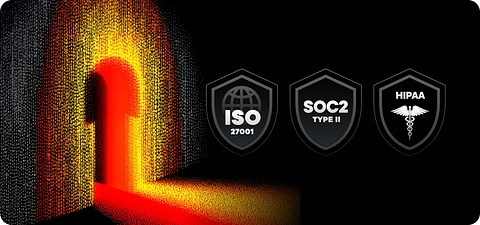
ISO 27001-grade controls baseline. HIPAA-aware deployment for US healthcare. PHI handling for European clinical data. SOC 2-friendly architecture for enterprise. Audit trails on every prediction. Versioned model artifacts. Reproducible training pipelines. The kind of model infrastructure that survives the first audit.

What we mean by "production-ready"

A lot of ML projects never reach production. They live in notebooks, get demoed to leadership, and quietly die when nobody can figure out how to integrate them.

We define production-ready as five things:

  • Compliance architecture, not compliance theatre. HIPAA, GDPR, PHI handling, audit trails, role-based access. Not a checkbox at the end of the project. The foundation the architecture is built on.
  • Real integrations, not screenshots of integrations. The platform actually connects to the lab system, the EHR, the insurance verification, the identity registry, the pharmacy network. Tested with production data. Monitored in production.
  • Workflow that matches clinical reality. The clinician doesn't have to learn a new mental model. The platform supports how care already happens, with the friction removed.
  • Audit trails on every action that touches a patient. Every login, every data change, every clinical decision recorded, attributed, and exportable. Whatever your regulator, auditor, or board needs to see.

The questions we get asked.

  • Do we have enough data to train a model?

    Maybe. The honest answer depends on what you're predicting, how rare the outcome is, and how messy the data is. We do a feasibility check up front, usually within two weeks, and tell you straight whether the project is viable, what it would take to make it viable, or whether you'd be better off starting with a rule-based system instead.

  • How accurate will the model be?

    Depends on the problem. Some problems have a high ceiling. Others have a lower one. We benchmark against existing approaches (manual scoring, rules, gut feel) and only ship if the model meaningfully beats them.

  • What about compliance and regulation?

    We architect for it. HIPAA, GDPR, PHI handling, audit trails on every prediction, versioned model artifacts, documented training data lineage, and reproducible training pipelines. If your model is going into a regulated environment, we build to those requirements from day one.

  • Can you integrate the model into our existing platform?

    Yes. The model ships as an API your platform calls. We've integrated prediction models into CMS-driven websites, custom platforms, healthcare portals, and operational dashboards. If your system can make an HTTP request, it can use the model.

Got a prediction problem?

Tell us what you want to predict and what data you have. We'll tell you straight whether a model is the right answer, what it'll take to build, and what it'll cost.