



Back to custom platforms

Back office software.

Built around how you actually operate.

The admin tools, operations platforms, and internal workflows your team runs on. Designed for your business, not forced to fit existing templated software.

  • pvdd
  • Ziz
  • Denso
  • Kinsyn

What we mean by back office software.

Back office software is the set of internal systems your team uses to actually run the business, not the customer-facing product, but everything behind it. Order processing, operations, admin workflows, reporting, compliance. The stuff that makes the front end possible.

Admin platforms

The control center for the people running the business.

Every business has a small group of people who need to see everything, change anything, and answer to no one for it. Founders. Operations leads. Account managers. Finance teams. 

We build admin platforms for them. The tool that gives full visibility into the business, full control over the data, and the right level of access for whoever needs it. Not a dashboard with a few buttons. A real interface for running operations.

Operations software

The tools your team uses to run the day-to-day.

Most operational work happens in the gap between systems. Customer support reps tab between the CRM, the order system, the shipping tracker, and the support tool to answer one question. Account managers rebuild the same report every Monday in Excel. Logistics teams check three dashboards before making a routing decision. The tools exist, but the workflow doesn't.

We build operations software that closes the gap. Custom interfaces designed around the actual job, not the systems behind it. Your team logs in once, sees what they need, and gets the work done without bouncing between five tabs.

The trick is starting from the workflow, not the data. Most operational software is built data-out: here are the records, here are the fields, build a UI around them. We build workflow-in: what does this team do every day, what slows them down, what would make them ten times faster? Then we design the interface around that.

Workflow automation

The processes that should run themselves.

Every business runs on processes. New customer onboarded. Order placed. Refund requested. Lab result received. Contract signed. Each one of these triggers a chain of actions: notify someone, update a system, generate a document, schedule a follow-up. Most of those actions are done by people, manually, every time.

We build workflow automation that takes the repeating chains off your team's plate. Trigger-based workflows that fire when something happens. Multi-step sequences that move data, generate documents, send notifications, and update systems automatically. Rule engines that branch based on conditions. Scheduled jobs that run quietly in the background while your team focuses on the work that needs human judgment.

The result isn't replacing people. It's removing the work that shouldn't have been theirs in the first place.

Approval systems

Reviews, sign-offs, and the audit trail behind them.

Most businesses run on approvals. Expense reports. Contract reviews. Treatment plans. Marketing co-op submissions. Hiring decisions. Purchase orders. Insurance claims. Every one of these lives in the gap between "someone wants to do something" and "someone with authority says yes."

We build approval systems that fit the way your business actually makes decisions. Multi-step approval chains. Conditional routing based on amount, department, or risk level. Delegation when an approver is out. Parallel approvals when multiple people need to sign off. Escalation when something stalls.

And the part most buyers care about most: a complete audit trail. Every submission, every comment, every approval, every rejection: timestamped, attributed, and exportable. Whether you're audited annually or just need to know who said yes to what last quarter, the answer is one query away.

Why clients keep building with us.

  • Embedded, not external.

    We don't hand off deliverables and disappear. We plug into your team, your tools, and your goals and we own the outcome alongside you.

  • One agency, full-stack.

    Strategy, design, and engineering in the same room. Fewer handoffs, faster decisions, better outcomes.

  • Startup speed, production quality

    We ship in weeks what most teams ship in quarters without the technical debt that kills scale-ups or stalls pilots.

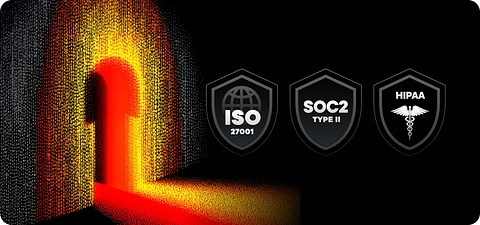
Compliance and certifications

Back office systems hold your most sensitive data. Financials, personal records, operational logic, customer information. We build like that matters, because it does.

HIPAA
For US-facing healthcare and telemedicine platforms.

GDPR & PHI handling
For European clinical data and cross-border flows.

ISO 27001
Our own certified information security management system.

SOC 2 Type II
Independently audited security controls for enterprise buyers.

The questions we get asked.

  • What is back office software?

    Back office software is the collection of internal systems your business uses to handle operations, administration, finance, and workflows. Everything that happens behind the customer-facing product. It can be off-the-shelf or custom-built to match your specific processes.

  • How is custom back office software different from ERP?

    An ERP is a prebuilt system that covers common business functions in a standard way. Custom back office software is built around how your business actually works. Most of our clients use both: an ERP for the generic stuff, and custom software for the parts that are specific to them and that matter most.

  • How long does it take to build a back office system?

    Most projects launch a working first version in 8 to 16 weeks, depending on complexity and integrations. We scope tightly upfront so you know what ships when, and we release in increments rather than waiting for a big-bang launch.

  • Can you integrate with our existing ERP / CRM / finance tools?

    Yes. Integration is usually the core of the work, not an add-on. We connect to SAP, Microsoft Dynamics, Salesforce, HubSpot, Exact, Xero, custom APIs, and anything else your stack includes. If it has an API or a database, we can talk to it.

  • Do you replace our current back office, or extend it?

    Both, depending on what makes sense. Sometimes the right call is to rebuild a legacy system from scratch. More often, we extend what works, replace what doesn't, and connect the two cleanly so your team doesn't feel the seam.

  • What does it cost to build custom back office software?

    It depends on scope, integrations, and how much of your operation it covers. A focused internal tool can land in the low tens of thousands. A full operations platform with multiple integrations is a bigger investment. We define that clearly in the scoping call before you commit to anything.

  • Can our non-technical team manage it after launch?

    Yes. We build admin interfaces and content management into every system so your team can add users, change settings, update rules, and adjust workflows without calling a developer. We also train your team on day one.

  • Is custom back office software secure enough for regulated industries?

    Yes, and often more secure than off-the-shelf alternatives because it's built to your compliance requirements rather than a generic baseline. We work under ISO 27001 and SOC 2 Type II, and we've delivered HIPAA-compliant systems for healthcare clients.

Stop patching. Start building.